Few visual elements are as universally recognizable and evocative as the radiant glow of a neon sign. From bustling cityscapes to cozy diner windows, these vibrant tubes of light have captivated us for decades. But have you ever paused to wonder what truly creates that distinct, mesmerizing luminescence? The secret lies in a fascinating state of matter known as plasma.
While often simply called "neon signs," the magic behind their illumination involves much more than just the element neon. It's a brilliant interplay of physics, chemistry, and high voltage, transforming an invisible gas into a luminous art form. Join us as we demystify the science behind these iconic lights, revealing how plasma turns inert gas into a beacon of color.
Unveiling the Fourth State of Matter: Plasma
At the heart of every traditional neon sign's glow is plasma – often referred to as the fourth state of matter. Unlike solids, liquids, or gases, plasma is a super-charged gas where atoms have been ripped apart. Imagine an ordinary gas, then pump it full of enough energy to strip electrons from its atoms, leaving behind a chaotic, energetic soup of free electrons and positively charged ions. This is plasma.
This unique state of matter behaves dramatically differently from regular gas. It conducts electricity, reacts to magnetic fields, and is incredibly common throughout the universe, making up 99% of all visible matter – found in stars, lightning, and even the beautiful auroras. In a neon sign, we're essentially creating a tiny, contained lightning storm to produce light.
From Glass Tube to Glimmering Art: The Journey of a Neon Sign
Creating a classic neon sign is a testament to both scientific precision and artisanal skill. It starts with specially shaped glass tubes, which are then meticulously filled and sealed. But what exactly goes into these tubes to produce that characteristic glow?
The journey begins with crafting the intricate glass shapes. Once the glass tubing is bent into the desired letters or designs, metal electrodes are carefully sealed into each end. The air is then completely evacuated from the tube, creating a near-perfect vacuum. This is a crucial step before introducing the precise amount of a pure, inert gas. For a deeper dive into the craftsmanship and components, explore How neon signs are made.
The Spark of Life: Generating Plasma Inside the Tube
With the gas sealed inside, the real magic begins when a high-voltage electrical current is introduced to the electrodes at either end of the tube. This isn't your standard household current; we're talking about thousands of volts, specifically designed to energize the gas molecules. The moment this powerful current is applied, free electrons within the tube are accelerated at incredible speeds.
These high-energy electrons violently collide with the atoms of the inert gas inside the tube. These collisions are so forceful that they knock other electrons right off the gas atoms. This process is called ionization, and it's how the gas transforms into plasma, a highly conductive medium. To truly grasp the complex physics behind this transformation, you'll want to read about The Physics of Plasma Generation.
The Radiant Revelation: How Plasma Emits Light
The transformation of gas into plasma is only half the story; the other half is how that plasma actually produces light. Once the gas atoms are ionized, they are left in an unstable, excited state. These "knocked-off" electrons don't just disappear; they eventually want to return to their original, stable orbits around the gas atoms.
When these unstable electrons fall back into place, they release their excess energy in the form of photons – tiny packets of light. It's this continuous cycle of electrons being knocked off and then returning, releasing photons, that creates the steady, vibrant glow we associate with neon signs. For a detailed explanation of this intricate dance, check out Excitation, Ionization, and Photon Emission.
A Spectrum of Hues: The Role of Different Inert Gases
While we generically call them "neon signs," only pure neon gas produces the classic fiery red-orange glow. To achieve the dazzling array of other colors, sign makers turn to different noble gases, each with its unique spectral signature. For instance, argon gas is responsible for beautiful blue tones, krypton creates a soft lavender, and xenon yields a pure white light.
The specific type of inert gas used fundamentally determines the color emitted by the plasma. Beyond just noble gases, some colors, particularly brighter blues, whites, and pastels, are achieved by combining argon gas with a tiny amount of mercury vapor. The tube's inner surface might also be coated with a phosphor, which glows when excited by the invisible UV light emitted by the energized gas and mercury vapor. Understanding how these various gases create their distinct colors is explored further in How inert gases emit light.
The Power Source: High Voltage for Brilliant Illumination
Powering a traditional neon sign requires a specialized electrical system capable of delivering the thousands of volts necessary to ionize the gas. This is handled by a neon transformer or power supply, which takes standard line voltage and steps it up to the extremely high voltages needed to initiate and maintain the plasma discharge within the glass tubes.
These transformers are robust components designed to safely and consistently deliver the required power, ensuring a stable and uniform glow from the sign. The intricate wiring and specific power requirements are vital for both the performance and safety of classic neon installations. Dive deeper into the electrical engineering behind these luminous displays by reading about High Voltage Power Supplies &.
The Enduring Allure and Modern Evolution
Traditional plasma neon signs offer an unparalleled aesthetic. Their rich, uniform glow, the authentic nostalgic vibe, and the artisanal craft of hand-blown glass make them truly unique. However, these marvels are also known for their fragility, higher energy consumption, and occasional maintenance needs.
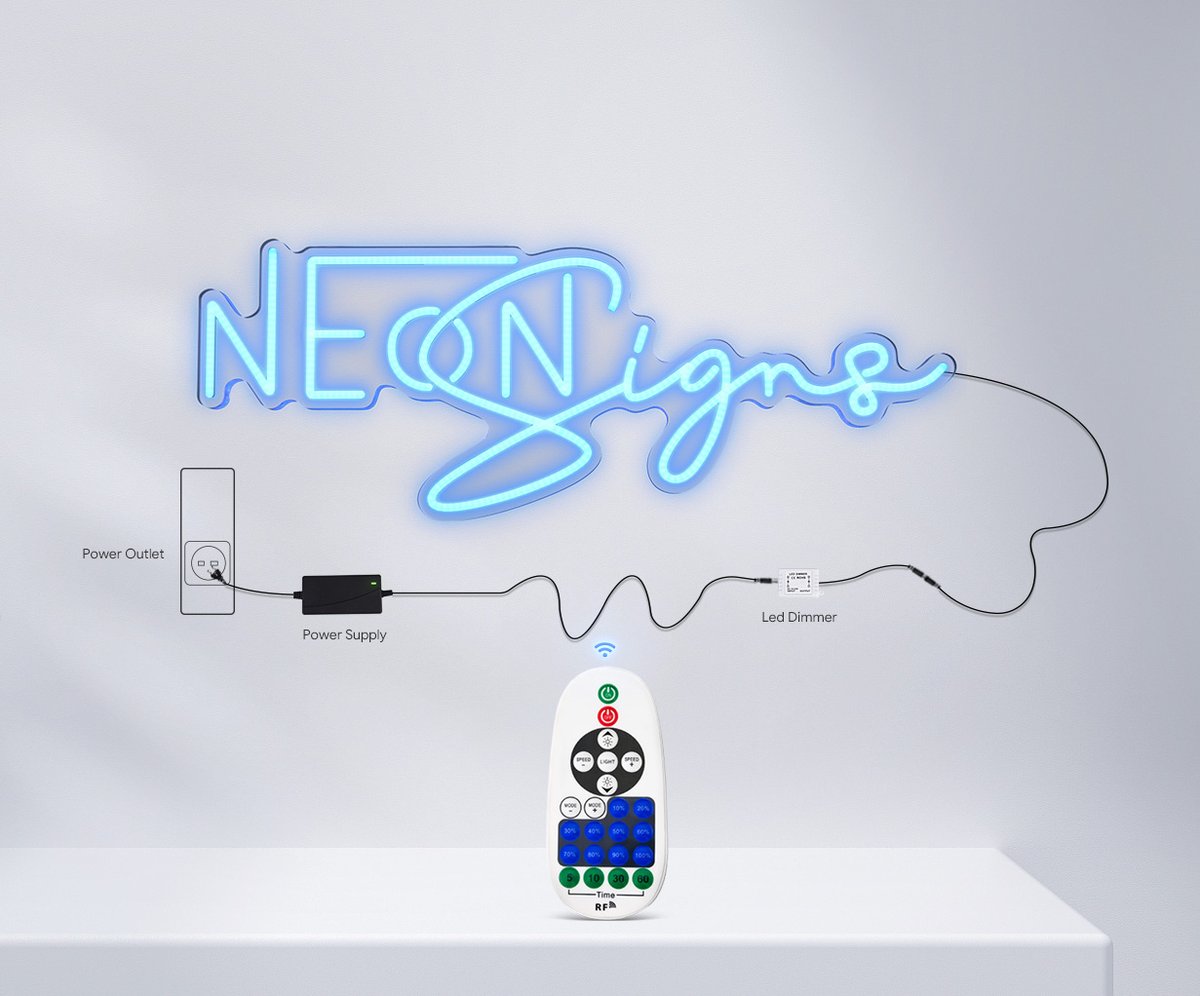
Today, modern LED "neon" signs offer a compelling alternative. These flexible, durable plastic tubes embedded with tiny LED lights effectively mimic the classic neon aesthetic without using gas, plasma, or high voltage. They operate at low voltages, are shatterproof, highly energy-efficient, and incredibly versatile in terms of color and design. While they lack the true plasma science, they've made the neon look accessible to a wider audience.
From the super-charged plasma dancing within a glass tube to the delicate handiwork of master glass benders, the classic neon sign is a testament to scientific wonder and artistic expression. Understanding how these signs use plasma to generate light not only deepens our appreciation for their iconic glow but also connects us to the fundamental physics governing our universe. The next time you see a neon sign, remember the tiny, contained lightning storm that's bringing it to life.